I built Mondolino: a 3D island where kids learn through play, in Italian and English
Almost every kids’ app I tried had the same flaw: it was built so you never stop. Notifications, endless rewards, ads between levels, purchases hidden behind a bright button.
As a dad, I didn’t want that. As a developer, I knew it could be done differently.
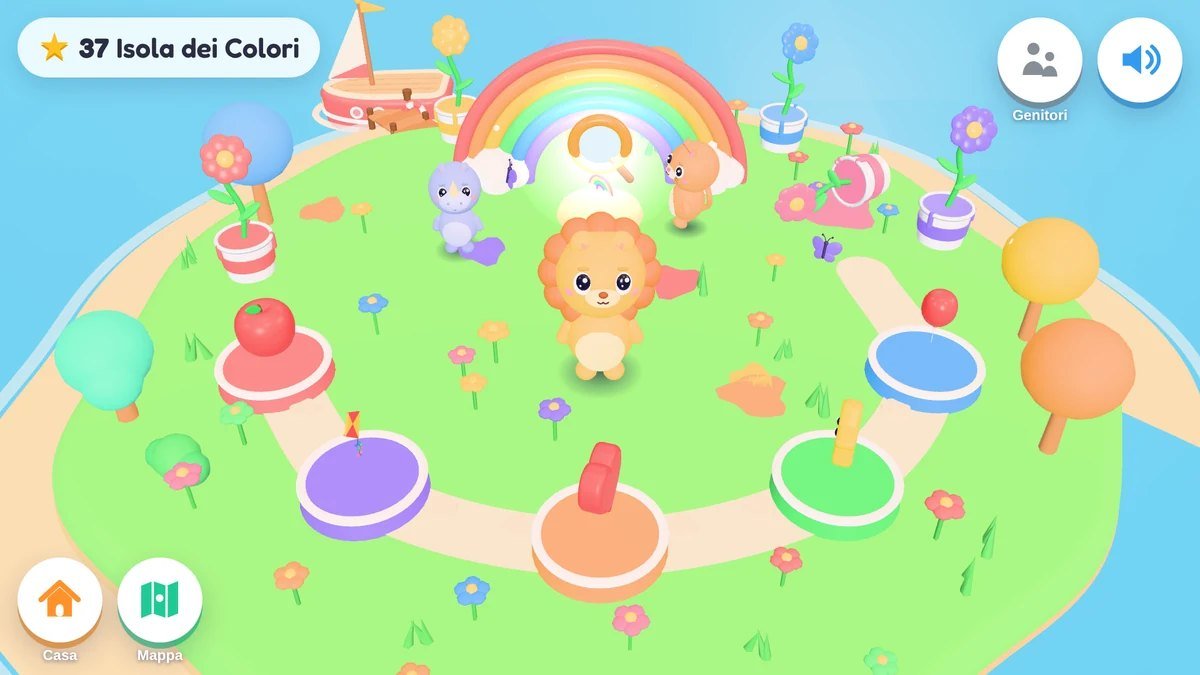
So I built Mondolino: a 3D island where children aged 3 to 6 learn letters, numbers, colours and emotions, in Italian and English. I made it for my son. Now it’s open to every family, for free, at mondolino.app.
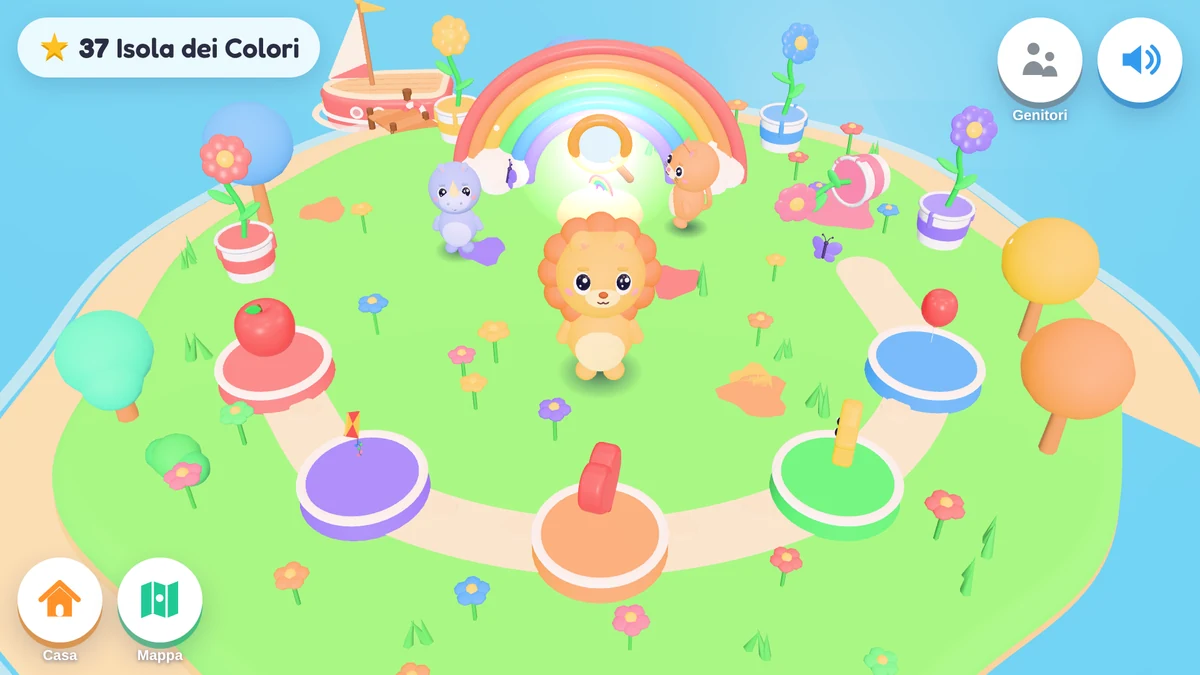
Leo the lion on the Island of Colours. Every child picks their own animal friend.
Four rules
Before writing a single line of code, I set four rules. They’re not up for debate.
- Free, forever. No subscriptions, no in-app purchases, not even in the parents’ area.
- Zero ads, and no third-party SDKs collecting data.
- No accounts. Open it and play. The child’s name is optional and stays on the device.
- It has to know when to stop. Parents decide the play time, and when it’s over the island goes to sleep.
A kids’ game that doesn’t know how to end isn’t a game. It’s a trap.
Learning through play, one step at a time
Every adventure is a path of five stops. Behind it there’s an adaptive engine that follows each letter and each number, and picks the right activity for that child: not too easy, not too hard.
- Letters start with their own name. Children trace them with a finger, in the right order, then find them again in bubbles and words.
- Two languages, two methods. In Italian, reading goes by syllables: ma-re, raz-zo. In English, it starts with letter sounds, phonics: s, a, t, p, i, n. It’s not the same exercise translated. Each language is learned the way it’s really learned.
- Numbers, colours and shapes. Counting by feeding a hungry friend, popping bubbles, painting 3D toys.
- Emotions and good habits. Understanding feelings and how to help a friend. Washing hands and brushing teeth, cooking together, playing fair.
Age shapes everything: how many choices the game offers, how far to count, which colours, shapes and emotions.
And children don’t need to read. Instructions come by voice and with pictures, and the voices are real: recorded in advance, two in Italian and two in English.
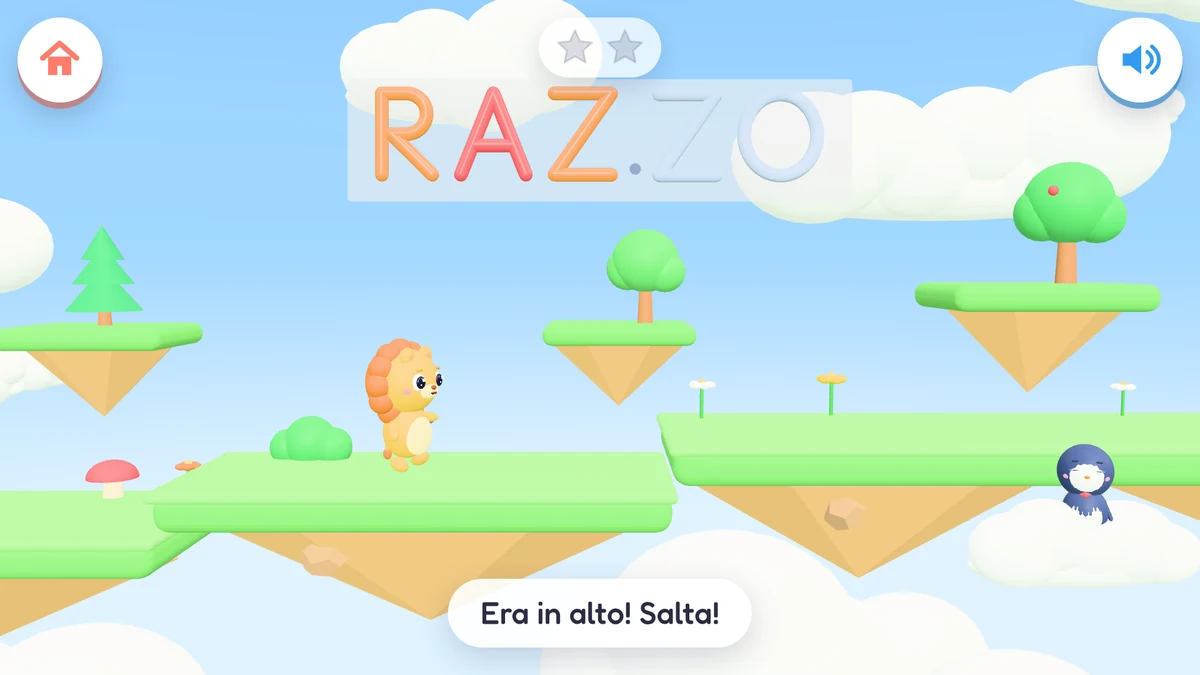
Salta! (Jump!): Leo runs across islands in the sky and collects the Italian word RAZZO (rocket), one syllable at a time.
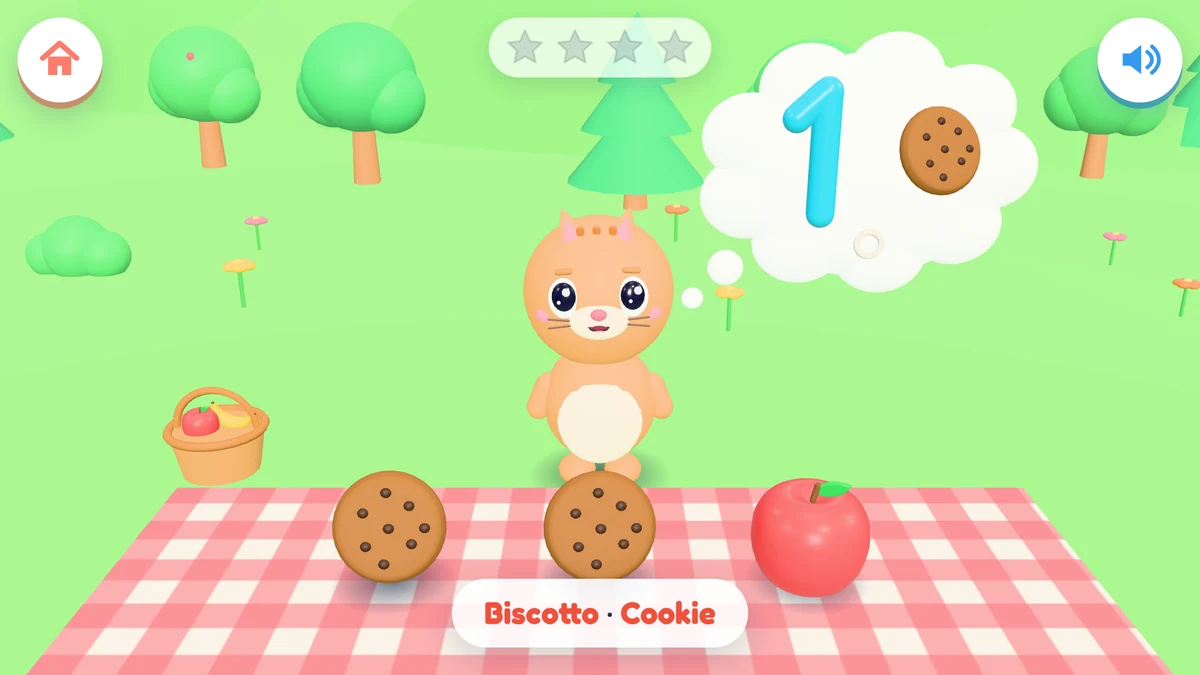
Feed me!: count the food for your kitten friend, and every word comes in both languages.
A world, not a catalogue of exercises
This was the difference I wanted: children don’t open a menu of exercises, they walk into a place. They pick their animal friend and set off.
The islands. An archipelago of themed islands: colours, letters, numbers, the farm, dinosaurs, the sea, space and more. You get there by boat, seaplane, hot-air balloon or rocket.
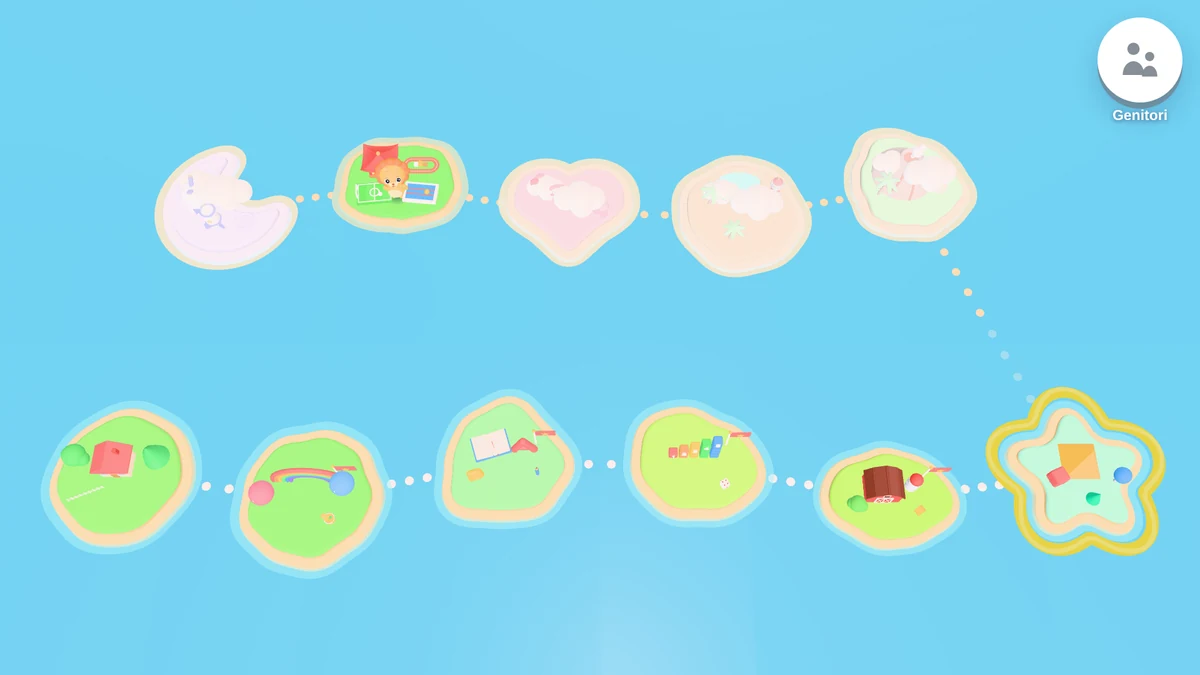
The archipelago map.
Sport Island. Running, football, basketball, swimming and karate. Children count, learn left and right, win a medal and shake hands with the other side. Yes, that’s something you learn too.
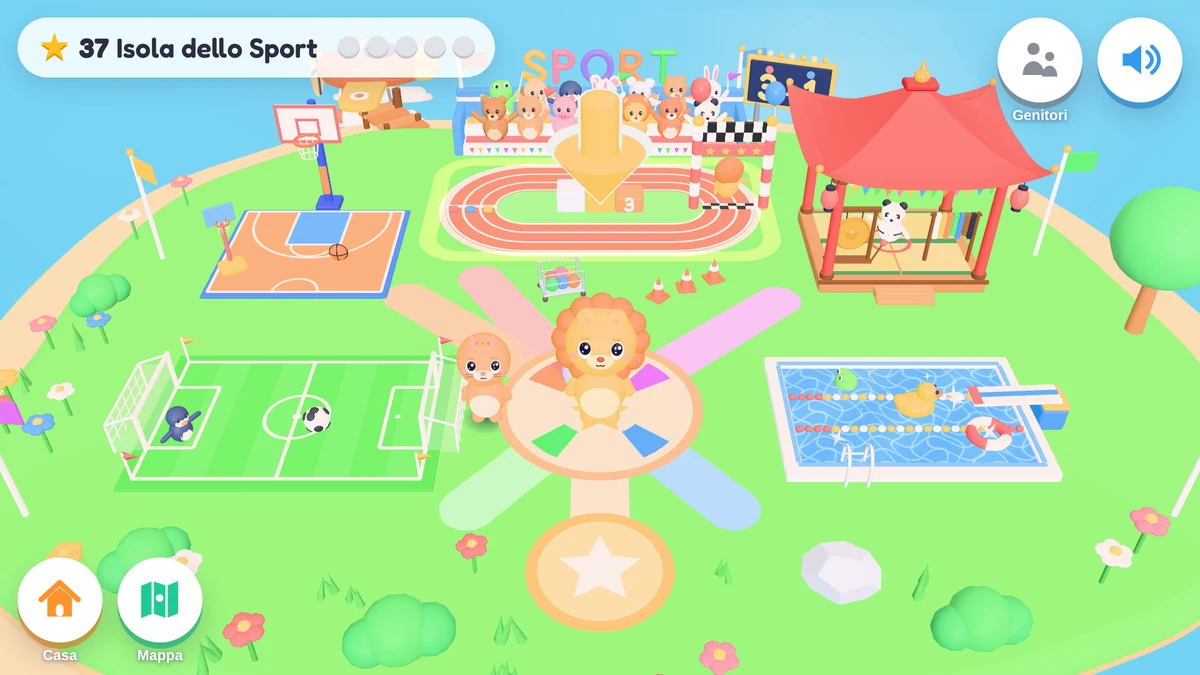
Sport Island.
The little house. Six rooms: bedroom, bathroom, kitchen, living room, garden and playground. Playing makes you hungry and sleepy, so the friend asks for food, a bath or a nap. Children look after it without guilt trips, and the game never locks up.
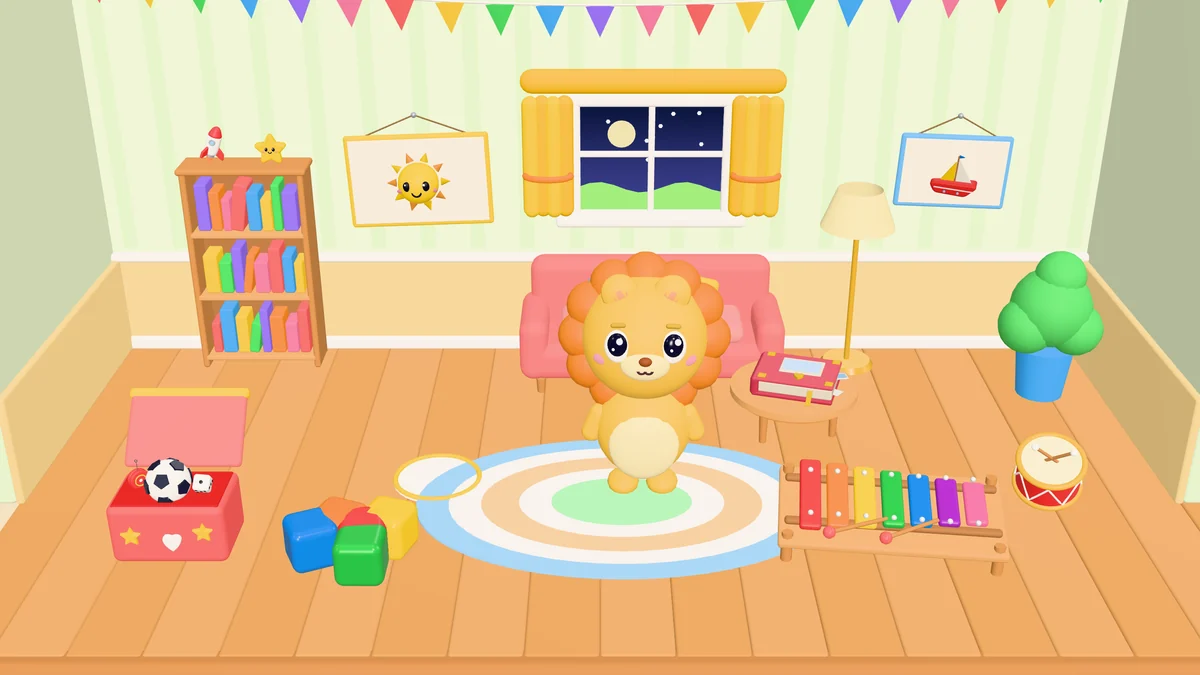
The living room.
Cooking lessons. Mum or dad suggests three recipes with pictures and the child chooses: pancakes, pizza, fruit salad, biscuits, a smoothie or a sandwich. First you wash your hands, and the oven is for grown-ups.
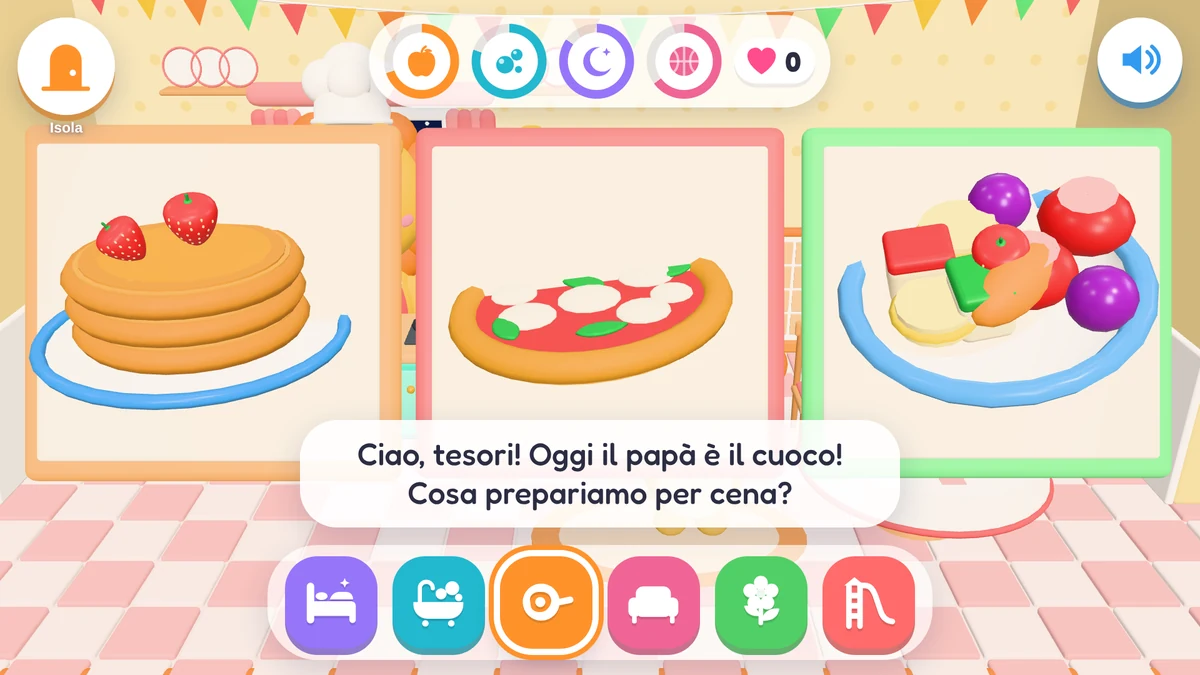
In the kitchen the menu has three illustrated recipes, and the child picks one.
Fairy tales and bedtime. Interactive fairy tales to listen to and live, animated stories to explore and, at the end of the day, bedtime stories.
The memory album. The game takes photos of the special moments on its own: a new island, a trophy, the first pizza. The photos go into a paper album you leaf through in 3D. They only show the game: the phone’s camera is never used.
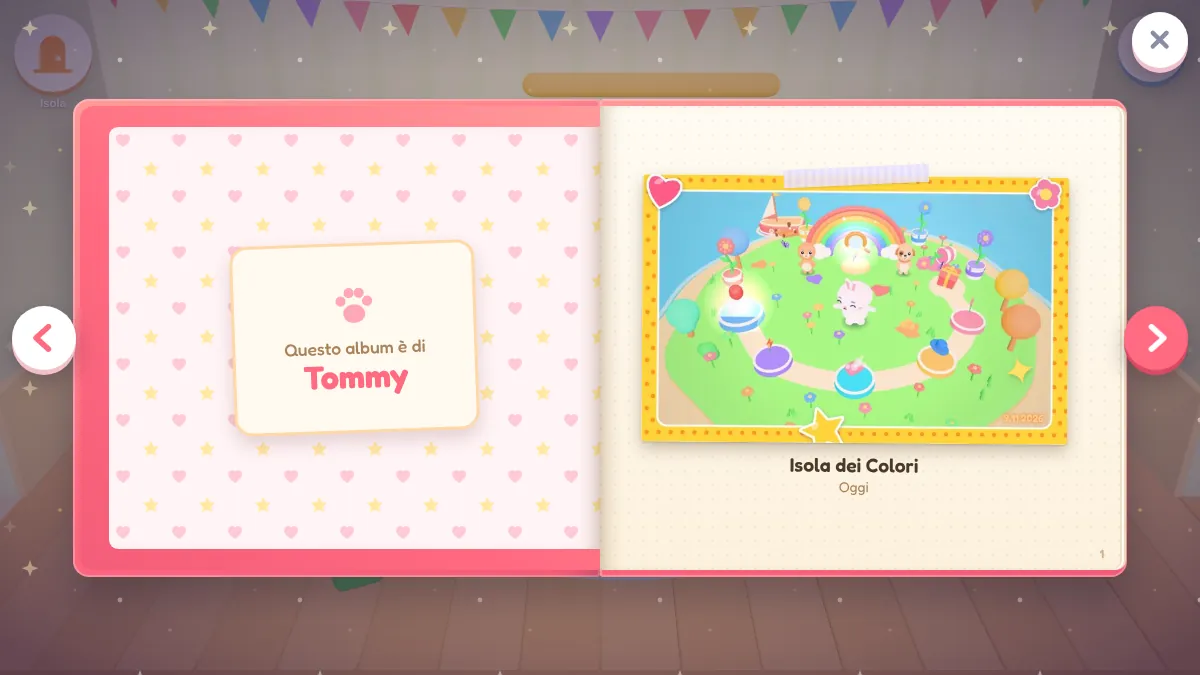
The memory album pages turn like a real notebook.
For parents: you decide how much, Mondolino takes care of how
There’s an area just for grown-ups, with what you need to guide your child without hovering.
- A child-proof door. To get in, you type in digits a number written in words, for example “eighty-one”. Easy for an adult, not for a four-year-old. Settings, photos and every external link live behind it.
- Progress in plain words. How many letters they recognise, how far they count, which colours, shapes and emotions they know. No grades, no leaderboards.
- Real-world missions. Every day, a mission to do together, away from the screen: “Find three red things at home!”
- Your family’s languages. Italian only, English only or both, in the mix you prefer. British or American English.
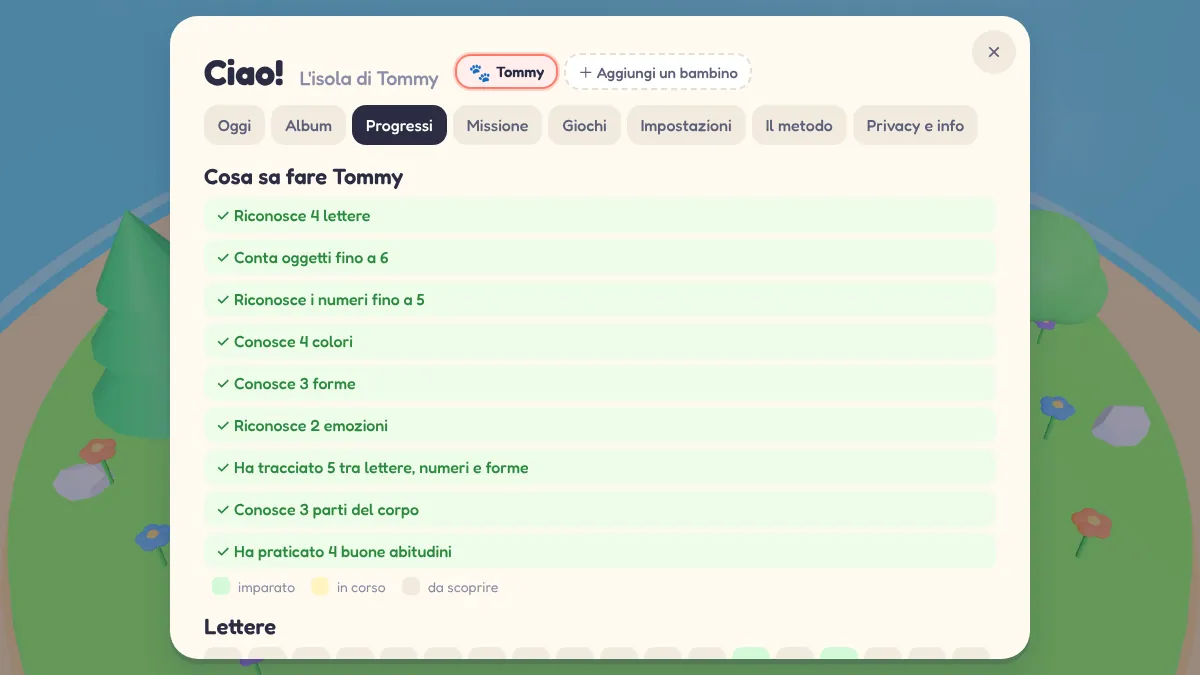
The Progress tab: what the child can do, without grades.
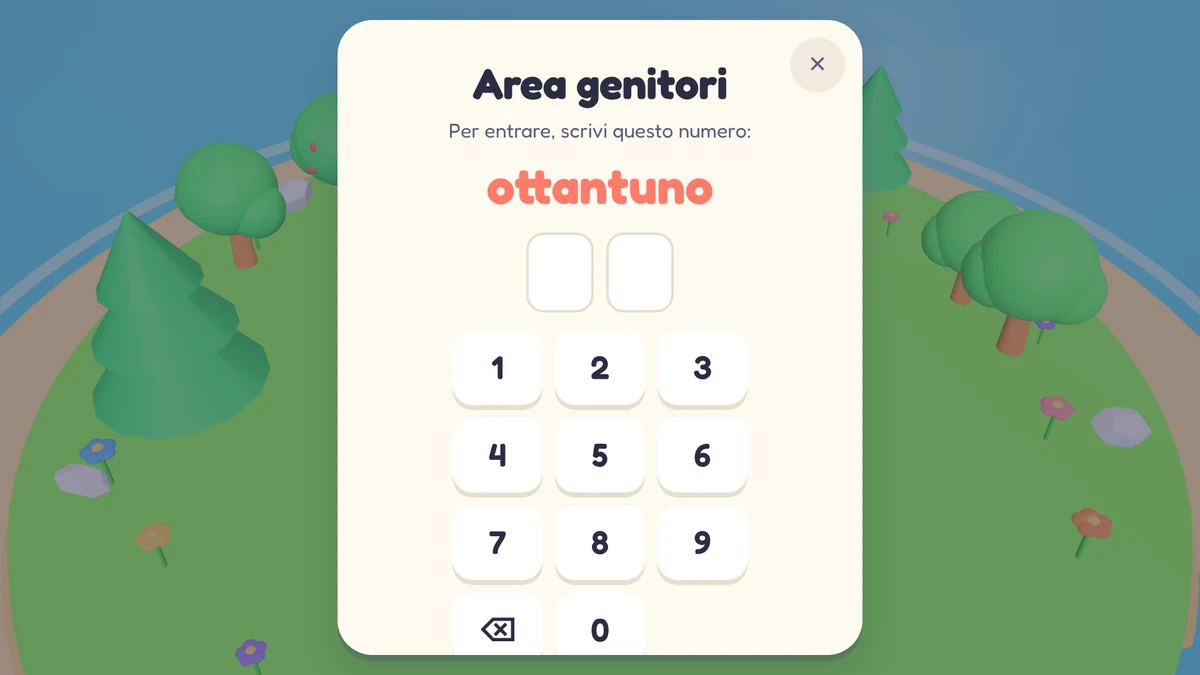
The door to the parents’ area: a number written in words.
No endless play. On purpose.
Parents decide the play time. When it’s over, Mondolino doesn’t just switch off: the island gets ready for bed with a little goodnight ritual. Every adventure has a beginning and an end. No notifications, no tricks to keep children glued to the screen.
This is the choice I believe in most. A screen that switches off gently teaches something to grown-ups too.
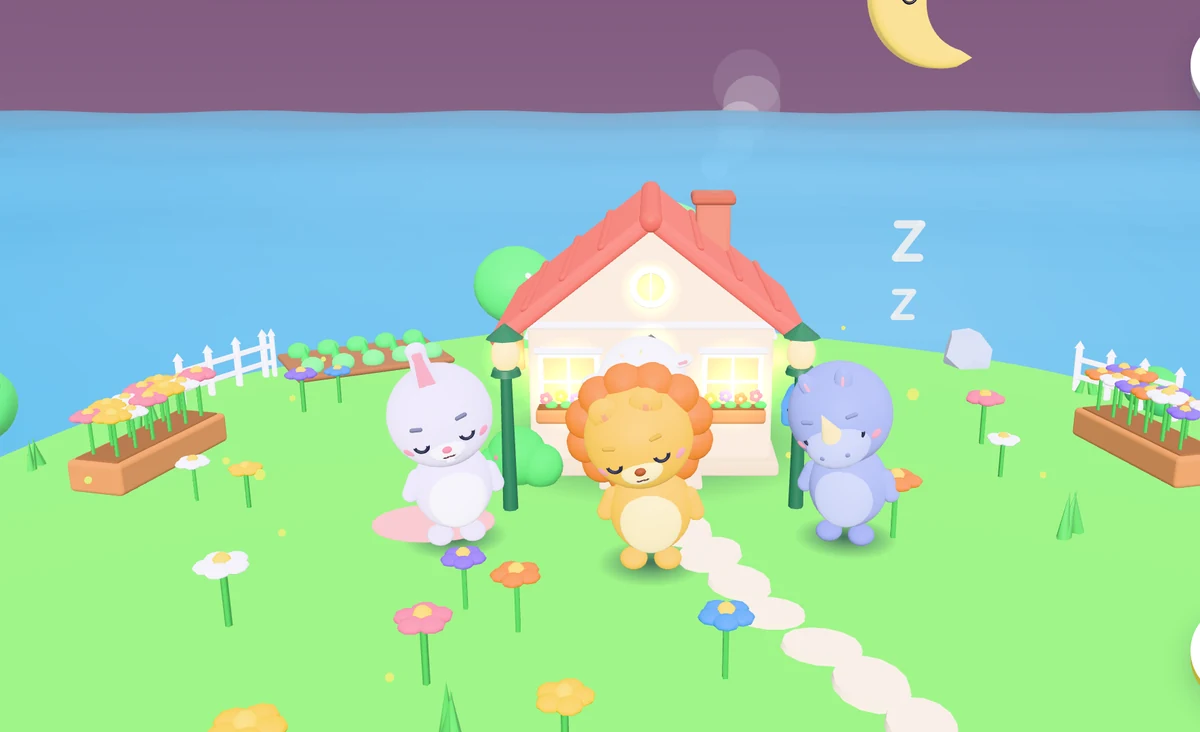
When time is up, the island goes to sleep.
Who it’s for
Mondolino is made for families who live between two languages:
- Italian families abroad, to keep Italian alive next to the English children already hear at school and at the park.
- Bilingual families, where one parent speaks Italian and the other English. The same animal friends speak both languages, and you choose how much room each one gets.
- Italian families who want English, for a first meeting that’s natural and unhurried: words, letter sounds and numbers, always next to Italian.
Privacy, in plain words
Mondolino has no server collecting data. It doesn’t need one.
- No accounts, for the child or the parent.
- No ads and no third-party SDKs collecting data.
- No analytics, no advertising IDs, no cookies.
- No camera and no microphone.
- Name, progress and photos stay on the device, and you can delete them whenever you like.
How it’s made, for developers
- Three.js. The whole 3D world runs in the browser with WebGL: islands, the house, the animals and the mini-games.
- No backend. Progress lives on the device, in
localStorageand IndexedDB. That’s why the privacy promise isn’t a policy to read: it’s the architecture. I can’t collect data that never goes anywhere. - Installable like an app. With a manifest and a service worker, you can add it to your home screen straight from the browser and open it full screen. After the first visit it works offline too.
- Voices. The lines are recorded in advance with ElevenLabs: Valeria and Marco in Italian, Emma and Josh in English, and the male animals speak with the male voice. They’re audio files already inside the app; in the browser they download as they’re needed. The few unrecorded lines fall back to the device’s speech synthesis. The microphone is never used.
- iPhone, iPad and Android. The same codebase becomes a native app with Capacitor. They’re on their way.
Try it
Mondolino is at mondolino.app. It plays in the browser, free, no sign-up: all you need is a browser and a grown-up nearby.
Sit next to your child for ten minutes. Then watch what happens when time is up.
For practical questions there’s the Support page. If you have ideas or spot something that doesn’t work, find me on LinkedIn or X.